
Living with persistent tingling, numbness, or weakness is exhausting. You might feel like you are chasing a ghost because no one can see your pain.
You leave doctor appointments with temporary prescriptions but no real answers about why your hands burn, or your feet feel heavy. We understand how frustrating this cycle is. That’s why we provide the clarity you need. A nerve conduction study (NCV) is a powerful tool that moves beyond guesswork. It provides the objective data we need to see exactly how your nerves are functioning.
By understanding what a nerve conduction test diagnoses, you can take the first step toward a recovery plan that actually works for you. This means getting back to your daily routine, enjoying your hobbies, and regaining your independence faster.
How We Pinpoint the Source of Your Pain
Nerve symptoms are tricky because they often appear far from the actual source of the problem.
Tingling in your fingers might start in your wrist, or it could be a sign of a pinched nerve in your neck.
Without a precise diagnosis, you might spend months using treatments that do not address the root cause. We use nerve conduction testing to measure how quickly electrical signals travel through your body.
Healthy nerves send these signals at high speeds. When a nerve is compressed or damaged, the signal slows down or weakens. Knowing what a nerve conduction test diagnoses helps our Double Board-Certified specialists pinpoint the exact location of your discomfort.
Often, we perform this study alongside an electromyogram (EMG) to see how your muscles respond to nerve signals. Together, they give us a complete map of your health.
Common Conditions Identified with NCV Testing
This diagnostic tool is essential for identifying several common conditions that cause chronic pain and reduced mobility. We use it to identify issues such as:
- Carpal Tunnel Syndrome: This occurs when the median nerve in your wrist is compressed.
- Peripheral Neuropathy: This involves damage to nerves outside your brain and spinal cord, often causing burning or numbness.
- Pinched Nerves (Radiculopathy): These happen when a nerve root in your spine is squeezed by a disc or bone spur.
- Ulnar Nerve Issues: This affects the nerve near your elbow, often causing numbness in your little and ring fingers.
By finding these issues early, we can prevent further damage. According to the Mayo Clinic, these tests are vital for distinguishing between nerve disorders and muscle conditions.
A Faster Path to Movement and Independence
The most important benefit of knowing what a nerve conduction test diagnoses is the accuracy it brings to your care. We have seen many patients who tried generic treatments for years without success.
Once we have the data from an NCV, we create targeted plans to address the damage. For example, a wrist splint will not help if the pain is actually coming from your spine.
By identifying the true source, we save you time and help you avoid unnecessary procedures. We focus on specialized care, including Interventional Pain Management and Physical Medicine & Rehabilitation (PM&R), to help you regain function. Our goal is to help you get back to walking, gardening, or playing with your grandkids without the burden of constant pain.
What to Expect During Your Visit
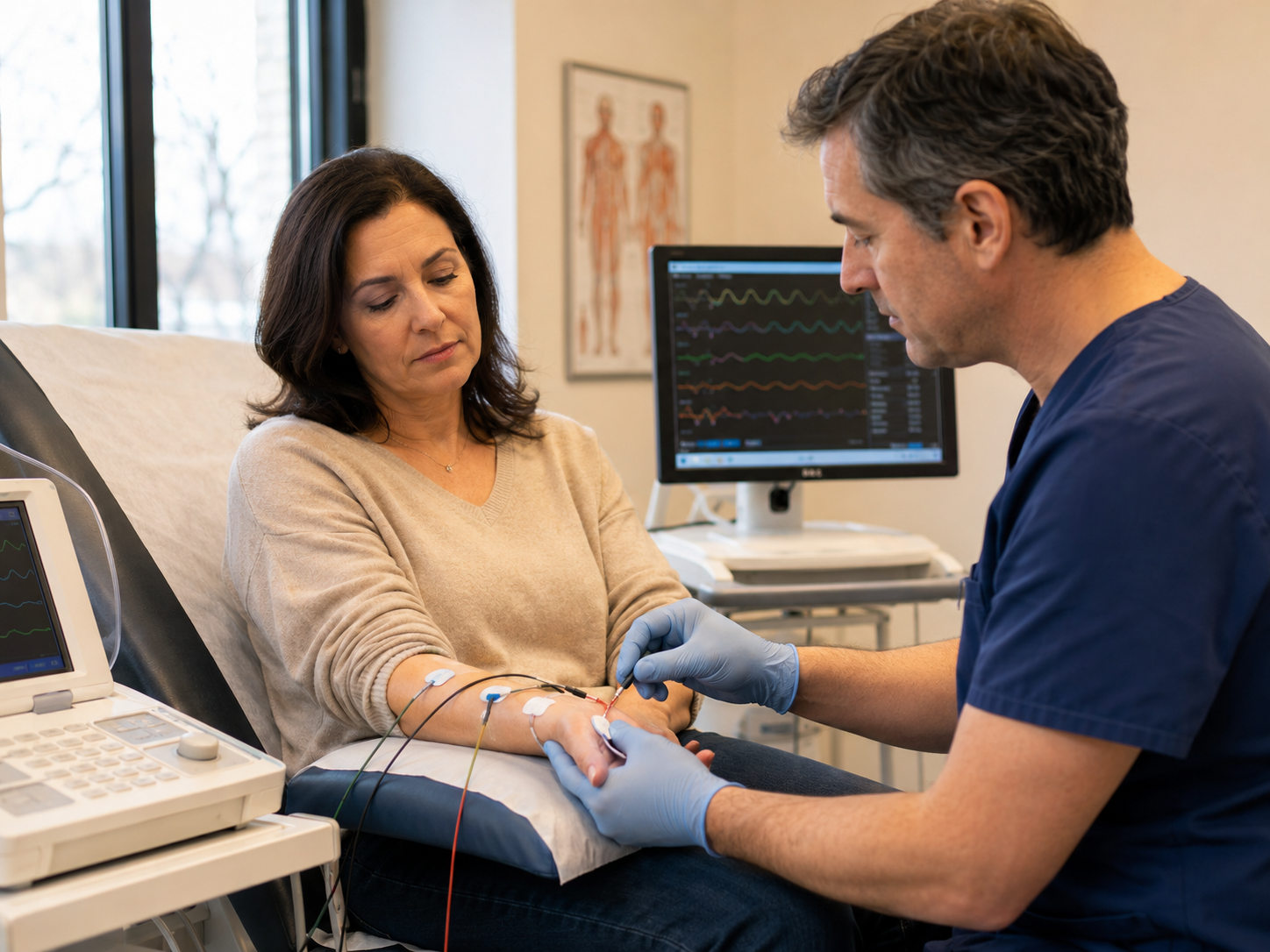
We want you to feel supported and comfortable throughout your visit. An NCV typically takes about 30 to 60 minutes. We place small sensors on your skin and use tiny electrical pulses to test the nerves.
Most patients describe the feeling as a quick tingle or a tapping sensation. There is no downtime after the test. You can return to your normal routine immediately after leaving our office. For our neighbors in skilled nursing facilities, we even offer on-site testing.
This makes the process as convenient as possible, ensuring you get the answers you need without the stress of travel.
Clear Answers for Your Nerve Health Questions
What happens if my nerve conduction test results are abnormal?
An abnormal result is a helpful piece of the puzzle. It means we have found measurable evidence of nerve dysfunction, such as slowed signals. We will sit down with you to explain exactly what the numbers mean and how they match your symptoms. This finding allows us to move forward with an evidence-backed treatment plan.
What is the number one medical condition that causes neuropathy?
Diabetes is the leading cause of peripheral neuropathy in the United States. High blood sugar can damage the delicate fibers of your nerves over time. According to the Cleveland Clinic, early testing is vital to managing the condition and preventing further damage to your feet and hands.
What is the next step after a nerve conduction test?
Once we have your results, we will discuss your options. Depending on the findings, your next step might include physical therapy, medication adjustments, or advanced procedures like nerve blocks. We focus on the most effective, least invasive way to restore your quality of life.
What diseases can a nerve conduction test show?
Beyond common issues like carpal tunnel, an NCV can help identify more complex conditions. These include Guillain-Barré syndrome, chronic inflammatory demyelinating polyneuropathy (CIDP), and even certain inherited nerve disorders. It is a versatile tool for ruling out serious conditions so we can focus on your relief.
How soon will I see improvements after my diagnosis?
Once we identify what a nerve conduction test diagnoses in your specific case, we can start targeted treatment immediately. Many patients feel a sense of relief just by having a name for their pain. With the right plan, improvements in mobility and comfort often begin within a few weeks of starting your new therapy.
Get Back to Doing What You Love
You do not have to live with the anxiety of unexplained pain. Understanding what a nerve conduction test diagnoses is the first step toward a life with more movement and less discomfort.
Our team provides patient-centered care that listens to your story and uses advanced science to
find a solution. Let’s work together to help you regain your independence.
Ready to find the source of your pain? Contact the Florida Spine & Pain Institute today to schedule your diagnostic consultation.
Disclaimer: The information provided on our website is for informational purposes only and is not intended as a substitute for professional medical advice, diagnosis, or treatment. Always consult a qualified healthcare provider about any health concerns or before starting a new treatment. We respect the privacy and confidentiality of our patients’ information and adhere to the highest standards of medical ethics. At Florida Spine & Pain Institute, we’re here to help you explore the options that are right for you.