
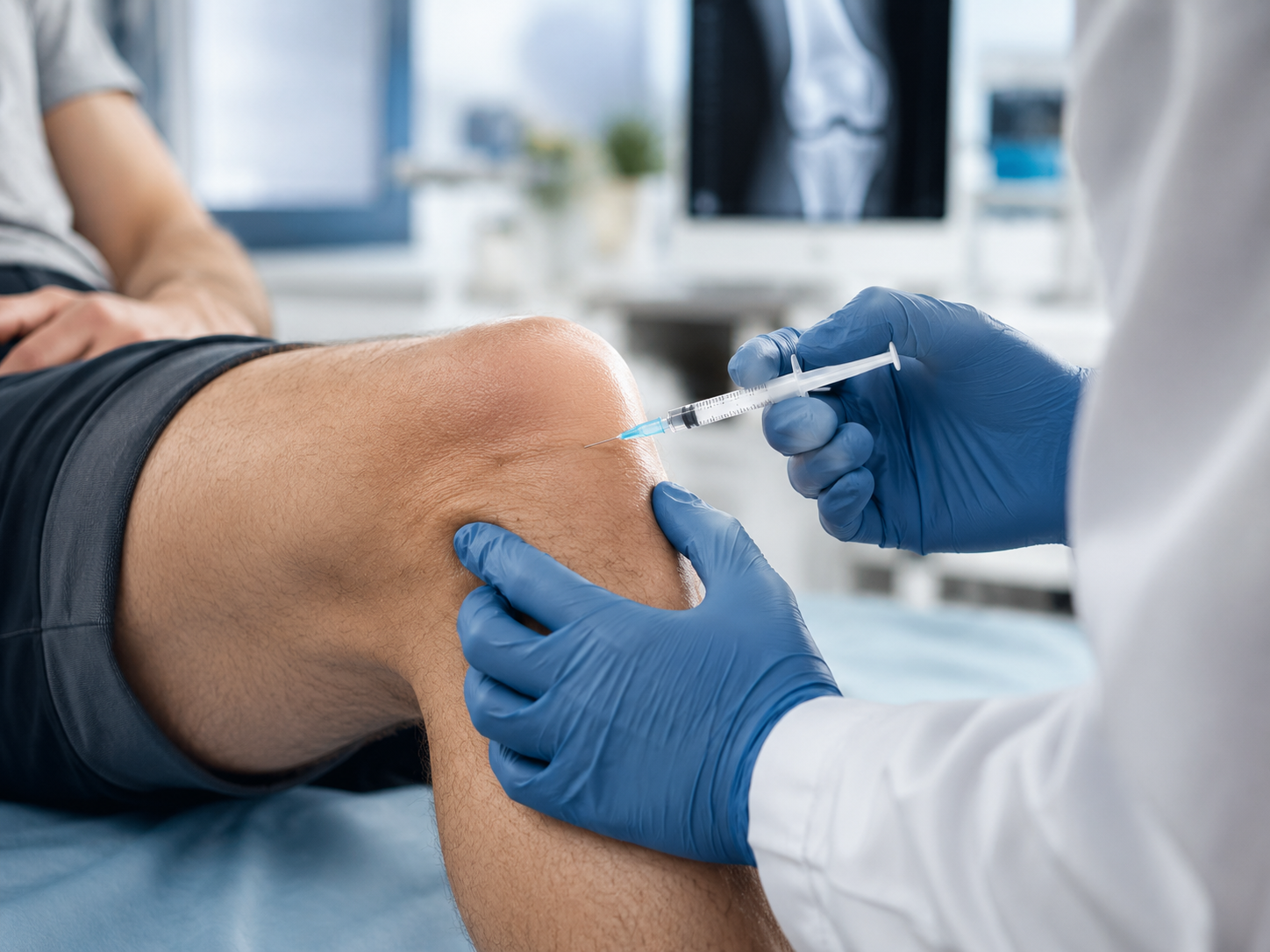
You know that sharp catch in your joint when you try to stand up after dinner. Or the dull ache that follows you upstairs every night. When you live with chronic discomfort, finding knee pain relief becomes a full-time job.
You’ve likely tried the ice packs, the braces, and the pills. Now, you’re looking at a needle and wondering if it’s the answer you’ve been searching for. The truth is that injections can be incredibly effective, but they aren’t a “one size fits all” fix. If you get the wrong treatment for the wrong problem, you’re just wasting time. You need a solution that matches what is actually happening inside your joint.
This guide breaks down the most common non-surgical options. We will look at how they work and how to know which one might finally help you get back to your favorite activities.
Why Your Diagnosis Dictates Your Results
The most important part of your care happens before any needle is even prepared.
If your knee hurts because of a mechanical tear, an anti-inflammatory shot might mask the pain for a week, but it won’t fix the underlying cause. That’s why we focus on the “why” behind the ache. We use precise imaging and physical exams to see if you’re dealing with cartilage loss, ligament strain, or simple inflammation.
Once we have a target, we can choose the right tool for the job.
Corticosteroid Injections: The Rapid Response
Most people call these “steroid shots.” They are designed to do one thing very well: shut down inflammation.
If your knee is swollen, red, or warm to the touch, this is often the first line of defense.
- How they work: These are synthetic versions of hormones your body already makes. When placed directly into the joint, they calm the immune response that causes pain.
- The timeline: You will usually feel significant knee pain relief within two to five days.
- The catch: These aren’t meant for long-term use. According to the Arthritis Foundation, repeated steroid injections can eventually damage the remaining cartilage in the joint.
These work best for calming a sudden flare-up so you can start physical therapy or other long-term treatments.
Hyaluronic Acid: Adding Back the Lubrication
Think of your knee like a hinge. In a healthy knee, a thick fluid called hyaluronic acid keeps everything sliding smoothly. When you have osteoarthritis, that fluid thins out. Your bones start to rub together, causing that familiar grinding sensation.
Hyaluronic acid injections, or viscosupplementation, act like a fresh oil change for your joint. The goal is to restore the natural cushioning that your body has lost over time.
This treatment is most effective for people with mild to moderate arthritis. It doesn’t grow new cartilage, but it can make the cartilage you have left work much better.
Many patients find that the relief from a single series of shots lasts for six months or longer.
Platelet-Rich Plasma (PRP): Helping the Body Heal
If you prefer an option that uses your own biology, PRP therapy is worth a look. This process involves taking a small blood sample and spinning it in a machine to concentrate your platelets.
These platelets are packed with growth factors that signal your body to repair itself.
Recent research published in the Orthopaedic Journal of Sports Medicine suggests that PRP may offer longer-lasting knee pain relief than traditional steroid shots for certain types of arthritis. Since it uses your own blood, the risk of an allergic reaction is almost zero. It is a great option for people who want to avoid synthetic drugs and focus on long-term joint health.
Avoiding the “Bad Knee” Trap
While looking for knee pain relief, many people fall into habits that actually make the problem worse. It is easy to think that if your knee hurts, you should stop moving entirely. However, complete rest can weaken the muscles around your knee. When those muscles get weak, your joint has to work even harder, which increases your pain.
Instead of stopping, focus on low-impact movement. Swimming, cycling, or even a slow walk on flat ground can keep the joint lubricated without causing more damage. The biggest mistake is waiting until the pain is unbearable to see a specialist. Early intervention with the right injection options can often prevent the need for more invasive procedures later.
Real Talk: Your Top Knee Questions Answered
What is the best treatment for knee pain?
The “best” treatment is the one that targets your specific pathology. For inflammatory flare-ups, steroids are excellent. For chronic “bone-on-bone” grinding, hyaluronic acid or PRP often provides superior results. The most effective plan usually combines targeted injections with specialized physical therapy.
What should I not do when I have knee pain?
Stop “pushing through” sharp, stabbing pain. This isn’t a situation where you can just work harder to get better results. Also, avoid wearing unsupportive shoes or doing high-impact exercises like running on concrete until you have a clear diagnosis from a professional.
What is the #1 mistake that makes bad knees worse?
The top mistake is relying on over-the-counter anti-inflammatories for years without fixing the underlying issue. These pills can irritate your stomach and don’t stop the joint from wearing down. Ignoring the root cause allows the joint to degrade to the point where surgery becomes the only option left.
What is the fastest way to relieve knee pain?
For immediate relief from a swollen knee, a corticosteroid injection is usually the fastest medical intervention. At home, the RICE method (Relative Rest, Ice, Compression, Elevation) remains the gold standard for quickly calming an acute injury.
Can I walk normally right after a knee injection?
Most patients can walk out of the office comfortably. However, we usually recommend taking it easy for 24 to 48 hours. Giving the medication time to settle into the joint without the stress of heavy activity helps ensure you get the most benefit from the treatment.
A Better Way to Move
You don’t have to accept a life of limited mobility. You deserve to walk, garden, and play with your grandkids without a constant reminder of your knees. While surgery is a vital tool for some, many people find incredible knee pain relief through the precise use of modern injections. With them, you can calm inflammation or restore the natural cushion in your joint without a hospital stay.
When you’re ready to stop managing the ache and start fixing the problem, reach out to our team for a consultation. We are dedicated to helping you find the specific treatment that fits your life.
Let’s figure out what’s going on together.
Disclaimer: The information provided on our website is for informational purposes only and is not intended as a substitute for professional medical advice, diagnosis, or treatment. Always consult a qualified healthcare provider about any health concerns or before starting a new treatment. We respect the privacy and confidentiality of our patients’ information and adhere to the highest standards of medical ethics. At Florida Spine & Pain Institute, we’re here to help you explore the options that are right for you.