
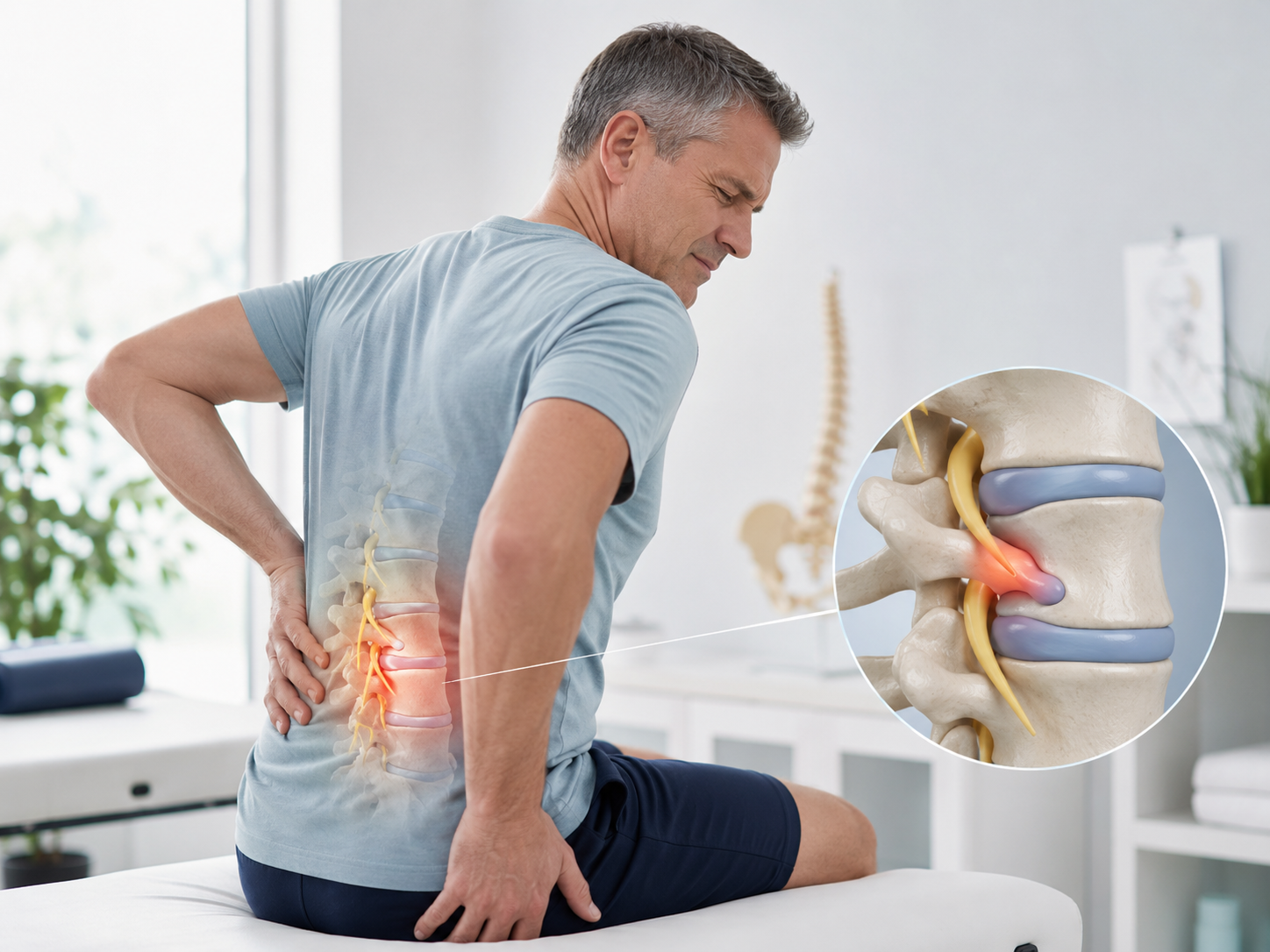
Most people who develop a herniated disc share a common experience: they wait. They rest, take over-the-counter pills, and hope the problem resolves on its own.
Sometimes it does, or at least partially. But for many, the pain persists, shifts, or returns worse than before. By the time they seek help, frustration has often set in.
You can relate to them. You’ve likely searched for answers about your symptoms and wondered if what you feel is normal. That hesitation is understandable. However, waiting rarely addresses the underlying problem, and not all discs heal the same way.
Our goal at Florida Spine & Pain Institute is to provide clarity. We want to help you understand your condition so you can make informed decisions about your care without fear or pressure.
What a Herniated Disc Means for Your Spine
Your spine consists of stacked vertebrae separated by discs. These are soft, rubbery cushions that absorb shock and allow you to move freely.
Each disc has a tough outer layer and a gel-like center. When that outer layer weakens or tears, the inner material pushes outward. That is a herniation.
You may hear the terms “slipped disc” and “bulging disc” used interchangeably. While they describe similar discomfort, they have distinct differences:
- Bulging Disc: The outer layer protrudes but remains intact.
- Herniated Disc: The inner material breaks through the outer layer.
Both conditions can compress nearby nerves. However, herniations tend to cause more acute, radiating pain.
Whether the issue is in your neck (cervical) or lower back (lumbar), understanding the structure of your spine is the first step toward lasting relief.
Bulging Disc Symptoms You Shouldn’t Ignore
Pain is usually what gets your attention, but it’s not always the first sign of a problem. Many patients dismiss early symptoms as simple muscle strain or “just getting older.” This delay can make the condition harder to treat later.
Here are examples of symptoms:
- Radiating Pain (Sciatica): A hallmark of disc-related nerve compression is pain that travels.
If you have a lumbar herniation, you might feel a sharp, burning sensation that starts in your lower back and travels through your glutes and down your leg. This is often called sciatica.
- Numbness and Tingling: Nerve compression doesn’t always cause pain. Sometimes, the first sign is a “pins and needles” sensation.
You might notice your foot feels “asleep” or your grip strength has weakened. These are signals that the nerve pathway is disrupted.
- Intermittent Symptoms: One reason people delay care is that symptoms can come and go. You might have a bad week followed by improvement.
This inconsistency usually indicates that the inflammation is fluctuating, while the underlying structural issue persists.
Diagnosis: Beyond the MRI
At Florida Spine & Pain Institute, diagnosis begins with a conversation. We listen to your history to understand what makes your pain better or worse. We then perform a physical exam to test your reflexes, strength, and range of motion.
We also believe in a solution-oriented approach. Our focus is on minimally invasive, non-opioid treatments that target the source of your pain rather than just masking it.
1. Epidural Steroid Injections
Epidural injections deliver powerful anti-inflammatory medication directly to the affected nerve. This reduces swelling and creates a “window of relief.”
This window allows you to participate in physical therapy that might have been too painful to attempt before.
2. Radiofrequency Ablation (RFA)
If your pain has become chronic, radiofrequency ablation may be an option. We use gentle heat to interrupt pain signals from specific nerves.
It’s a targeted, outpatient procedure that helps you return to your daily routine with minimal downtime.
3. Peripheral Nerve Stimulation
For persistent nerve pain, we may suggest peripheral nerve stimulation. This involves a small device that delivers mild electrical impulses to reset the way your brain perceives pain signals.
4. Physiatry
No procedure replaces the need for a strong foundation. We often combine our interventional treatments with physical medicine and rehabilitation.
This helps build the core strength necessary to support your spine and prevent future injuries.
Frequently Asked Questions
Can a herniated disc heal without surgery?
Yes, many herniated discs improve without surgery, especially when treated early with a combination of physical therapy, lifestyle modifications, and targeted interventions like epidural injections.
Surgery is typically reserved for cases that don’t respond to conservative treatment or involve severe neurological symptoms.
How do I know if a herniated disc causes my back pain?
Radiating pain, especially pain that travels down your leg or arm, is a common indicator. Numbness, tingling, or weakness in the affected limb also suggests nerve involvement.
However, an accurate diagnosis requires a physical examination and, often, imaging. Our specialists can help determine whether your symptoms are disc-related.
What happens if I ignore my symptoms?
Prolonged nerve compression can lead to permanent damage, including chronic numbness, weakness, or loss of function.
Early intervention improves outcomes. If your symptoms have persisted for several weeks or include neurological changes, we encourage you to schedule a consultation to explore your options.
Take the First Step Toward Herniated Disc Pain Relief Today
A herniated disc is a manageable condition, and you have options that don’t require major surgery or long-term dependence on medication.
At Florida Spine & Pain Institute, your recovery is our focus. We want to help you get back to the activities that matter most to you, whether that means gardening, playing with your grandchildren, or feeling confident at work again.
Your care is led by Dr. Javier Placer, MD, a nationally recognized leader in interventional pain and spine care, along with Dr. Harrison Haiden, DO, a physiatrist and rehabilitation medicine specialist dedicated to restoring function.
If you’re ready to explore real solutions, contact us today to schedule a consultation with our expert providers. Together, we can take the first step toward meaningful recovery and better movement.
Disclaimer: The information provided on our website is for informational purposes only and is not intended as a substitute for professional medical advice, diagnosis, or treatment. Always consult a qualified healthcare provider about any health concerns or before starting a new treatment. We respect the privacy and confidentiality of our patients’ information and adhere to the highest standards of medical ethics. At Florida Spine & Pain Institute, we’re here to help you explore the options that are right for you.