
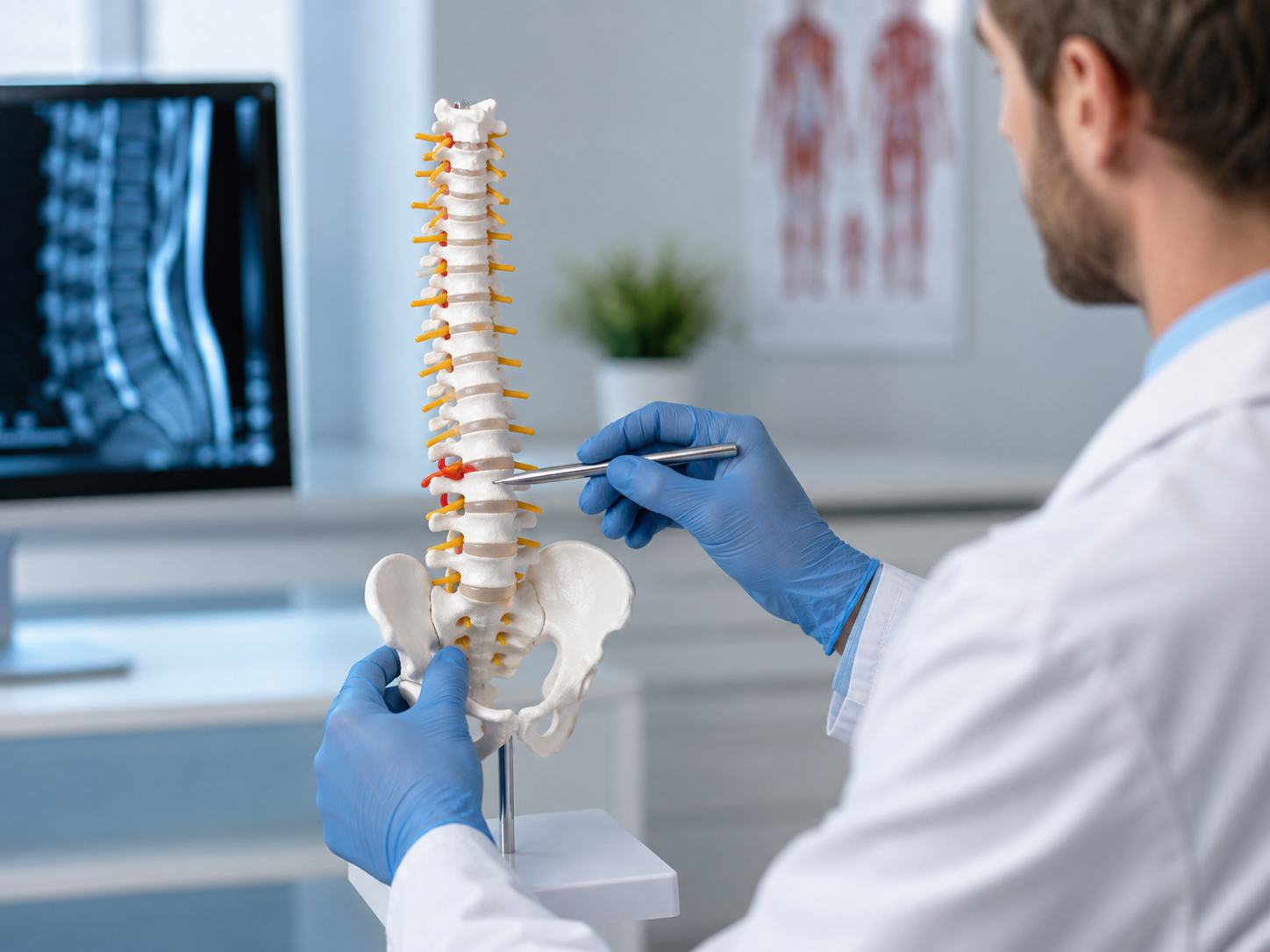
The main types of pain management procedures include injections, nerve blocks, radiofrequency ablation, stimulation therapies, regenerative options, and minimally invasive decompression procedures. Each option has a different purpose. Some reduce inflammation. Some help identify the pain source. Others target pain signals or support function. The right procedure depends on your diagnosis, symptoms, imaging, medical history, and treatment goals.
Pain procedures shouldn’t feel like a menu you’re expected to choose from alone.
The right question isn’t, “Which procedure sounds strongest?” It’s, “Which option matches the likely source of my pain?”
At Florida Spine & Pain Institute, our pain management treatments are selected based on diagnosis, symptoms, function, and goals. That matters because back, neck, joint, and nerve pain don’t all come from the same source.
Why Different Procedures Exist
Pain can come from many places. A spinal nerve, facet joint, sacroiliac joint, arthritic knee, injured tendon, or narrowed spinal canal can all create different pain patterns.
That’s why procedures are chosen based on:
- Diagnosis
- Symptoms
- Imaging results
- Physical exam findings
- Medical history
- Previous treatment response
- Medication risks
- Daily limitations
- Treatment goals
A pain treatment procedure should have a clear reason, and it must fit into a broader care plan.
4 Main Procedure Categories
Most interventional pain procedures fall into four practical groups.
| Procedure Type | Main Purpose | Examples |
| Diagnostic | Helps identify the likely pain source | EMG testing, nerve blocks, diagnostic injections |
| Inflammation-
Targeting |
Calms irritation around joints or nerves | Epidural, facet, and joint injections |
| Nerve-Targeting | Changes or interrupts pain signaling | Nerve blocks, radiofrequency ablation |
| Advanced Therapies | Used for specific complex or persistent pain patterns | Stimulation, platelet-rich plasma, lumbar decompression |
These categories can overlap. For example, an injection may help diagnose pain and reduce inflammation.
10 Types of Pain Management Procedures
To make sense of your care plan, you need to know about the different interventions that are available. The following procedures are commonly used to diagnose the source of pain, reduce inflammation, or modulate pain signaling, each tailored to specific patient needs and symptoms.
Diagnostic Procedures
Electromyogram Testing
An electromyogram, or EMG, is not a pain relief procedure. It’s a diagnostic test.
EMG and nerve conduction velocity studies measure how muscles and nerves are working. They may help evaluate symptoms such as numbness, tingling, burning, weakness, pins and needles, or suspected pinched nerves.
This information can help your provider decide whether symptoms are nerve-related and which treatment direction fits.
Nerve Blocks
Nerve blocks use medication near specific nerves to reduce or interrupt pain signals.
Some blocks are short-term and diagnostic. Others may offer symptom relief depending on the medication and condition.
A nerve block may be considered when symptoms suggest a specific nerve pathway is involved. Pain doctors may use the response to understand whether that nerve is contributing to your pain.
Nerve blocks may be used for chronic pain, post-surgical pain, or acute pain in selected cases.
Injection-Based Treatments
Epidural Steroid Injections
Epidural injections are often used when irritated spinal nerves contribute to neck, arm, back, or leg pain. The medication is placed in the epidural space around the spinal cord and nerve roots.
These injections commonly include a corticosteroid to reduce inflammation and an anesthetic to temporarily block pain signaling. They may be discussed for symptoms linked to conditions such as a slipped disc or trapped spinal nerve.
Epidural injections should not be treated as automatic repeat treatments. CMS guidance notes that repeat epidural steroid injections should be based on clinical response and documented improvement, not routine repetition.
Facet Joint Injections
Facet joints are small joints in the spine that help your back and neck bend, twist, and stay stable. When these joints become irritated or arthritic, they can contribute to neck or back pain.
Facet joint injections place medication near or into the facet joint area. They help reduce inflammation, temporarily control pain, and support diagnosis when your provider suspects these joints are part of the pain pattern.
Joint Injections
Joint injections are used for painful joints such as the shoulder, hip, or knee. They may include corticosteroid medication and anesthetic to reduce inflammation and help clarify whether the joint is a major pain source.
Joint injections can help when arthritis, inflammation, or injury affects movement.
Nerve-Targeting Treatments
Radiofrequency Ablation
Radiofrequency ablation, or RFA, uses heat from radio waves to disrupt pain-related nerve signals. It’s commonly discussed for certain facet joint or nerve-mediated pain patterns.
RFA is usually considered when an evaluation indicates that specific nerves are carrying pain signals. Although the results aren’t permanent, relief may last longer than anesthetic nerve blocks in some cases.
Spinal Cord and Peripheral Nerve Stimulation
Stimulation therapies use mild electrical signals to change how pain messages travel through the nervous system.
Spinal cord stimulation places leads near the spinal cord. It uses an alternate electrical current to change how chronic pain signals are processed before the brain fully recognizes them as pain.
Peripheral nerve stimulation targets nerves outside the brain and spinal cord. It’s a minimally invasive approach that uses mild electrical impulses near peripheral nerves to change pain signaling.
These options are usually considered for selected chronic or nerve-related pain conditions after careful evaluation.
Advanced Therapies
Sacroiliac Joint Stabilization
The sacroiliac joint connects the sacrum at the base of the spine to the pelvis. When this joint is unstable or irritated, pain may appear in the lower back, buttocks, groin, abdomen, or legs.
Sacroiliac joint stabilization is more advanced than an injection. It’s a minimally invasive procedure designed to stabilize the sacroiliac joint and support fusion when the diagnostic process points to SI joint dysfunction.
This option isn’t for every case of low back pain. It requires careful diagnosis.
PRP and Regenerative Medicine
Platelet-rich plasma (PRP) uses a concentrated portion of a patient’s own blood. It’s sometimes discussed for selected tendon, ligament, joint, or soft tissue concerns.
Regenerative medicine is a broader category that may include platelet-rich plasma and other biologic approaches. These therapies should be discussed carefully.
The FDA cautions that many regenerative medicine therapies aren’t approved to treat chronic pain. However, published research notes that regenerative approaches such as platelet-rich plasma, prolotherapy, and cell-based therapies also remain investigational or off-label for many pain-related uses.
That doesn’t mean every regenerative option is inappropriate. It means patient selection, evidence, risks, costs, and realistic expectations matter.
Lumbar Decompression and the mild® Procedure
The mild® Procedure is a minimally invasive lumbar decompression option for specific patients with lumbar spinal stenosis.
Lumbar spinal stenosis is the narrowing in the lower spine that can place pressure on nerves, which can contribute to leg pain, numbness, or difficulty standing and walking.
mild® is an outpatient treatment that removes a small amount of thickened ligament through a tiny incision, with no implant left behind. It’s an image-guided lumbar decompression technique used for lumbar spinal stenosis that hasn’t responded to conservative treatment.
This procedure is a specific option for a specific diagnosis. It’s not a general treatment for all back pain.
Questions to Ask Before a Procedure
Before any procedure, you should understand why it is being recommended. A good pain management plan should feel unambiguous, not generic.
If you are concerned about anything, ask for clarity.
Ask your provider:
- What diagnosis does this procedure address?
- Is this procedure diagnostic, therapeutic, or both?
- What are the benefits and risks?
- What should I expect afterward?
- How will we measure success?
- What happens if it doesn’t help?
- Are there non-procedure options to consider first?
- Will I need follow-up care or therapy?
- How does this procedure fit my broader care plan?
- What symptoms should I report after the procedure?
- Are there activity limits afterward?
- Is this procedure temporary, long-term, or part of a staged plan?
Procedures Work Best as Part of a Broader Plan
Pain procedures can be useful, but they’re rarely the entire plan.
Many patients also need medication review, physical therapy, home exercises, posture changes, bracing, imaging, diagnostic testing, or sleep support.
At Florida Spine & Pain Institute, having multiple options matters because it allows care to be matched to the likely pain source. Our goal isn’t to push every patient toward the same procedure. It’s to choose care that fits your diagnosis, goals, and daily function.
Not sure which procedure fits your pain pattern? We’re here to help you find the best plan that will reduce your pain.
Explore Your Pain Management Options
FAQs About Different Pain Management Treatments
Are Pain Management Injections the Same as Surgery?
No. Most pain management injections are minimally invasive and don’t repair, replace, or remove a structure. They’re often used to reduce inflammation, block pain signals, or help identify the likely pain source.
How Does a Doctor Choose the Right Pain Procedure?
Your doctor considers your diagnosis, symptoms, imaging, physical exam, medical history, previous treatments, medication risks, and goals. Our prescribed procedures match the likely pain source.
Will One Procedure Fix My Pain Permanently?
Usually, that’s not the right expectation. Some procedures provide temporary relief. Some help confirm a diagnosis. Others support longer-term function. Relief varies by condition, procedure, and patient response.
What if a Pain Procedure Doesn’t Work?
If a procedure doesn’t help enough, your provider will adjust the diagnosis, review imaging, consider different testing, change the treatment plan, or refer you to another specialist when needed.
Match the Procedure to the Pain Source
Pain relief procedures aren’t interchangeable. The right option depends on what’s driving your symptoms and how it impacts your movements.
Florida Spine & Pain Institute can help you understand your options and build a plan around your diagnosis, function, and goals.
Disclaimer: The information provided on our website is for informational purposes only and is not intended as a substitute for professional medical advice, diagnosis, or treatment. Always consult a qualified healthcare provider about any health concerns or before starting a new treatment.
We respect the privacy and confidentiality of our patients’ information and adhere to the highest standards of medical ethics. At Florida Spine & Pain Institute, we’re here to help you explore the options that are right for you.