
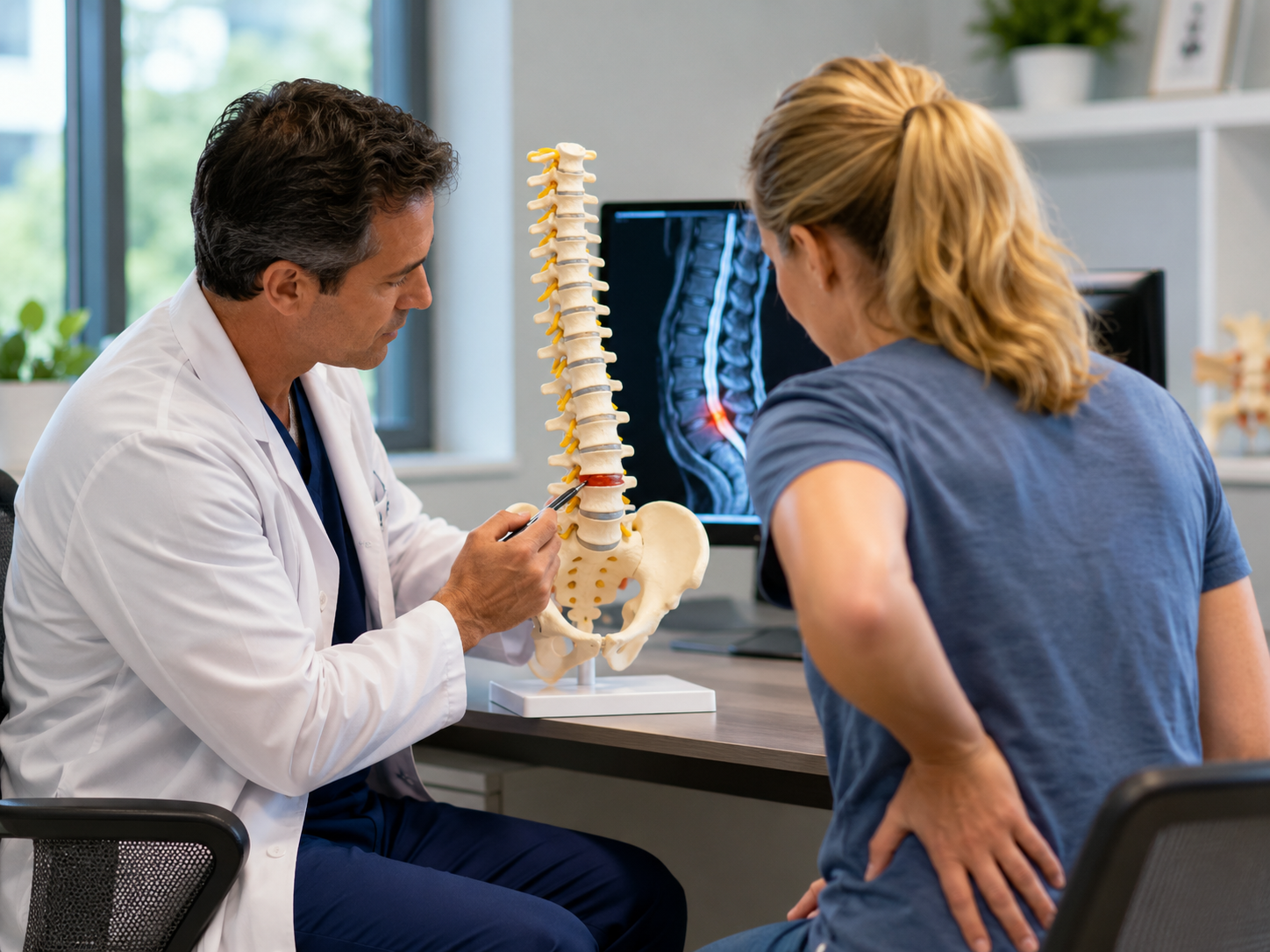
Sciatica has a way of upending your daily life. The shooting pain down your leg and the numbness that disrupts sleep, limits work, and slowly chips away at independence.
If you have dealt with this for weeks, you have likely tried a few things. Maybe stretching helped a little. Perhaps over-the-counter medications took the edge off. You may wonder if this discomfort is just your life now.
At Florida Spine & Pain Institute, we see how often sciatica is treated with generic advice that misses the bigger picture. Each patient is different, and the best treatment for sciatica is never a single, one-size-fits-all answer.
This guide provides a clear framework to help you understand your options and make decisions that move you forward.
Why Some Sciatica Treatments Fall Short
Most people don’t realize that sciatica is a description rather than a final diagnosis. It tells us where the pain travels, but not why.
According to the Cleveland Clinic, sciatica can result from a herniated disc, spinal stenosis, or even muscle compression.
This distinction matters. A treatment that works for a muscle issue may do nothing for a disc fragment pressing on a nerve root.
Many patients cycle through treatments without ever finding the underlying cause. They try physical therapy, switch to chiropractic care, and eventually end up frustrated.
The first step toward effective sciatica pain relief is identifying what is generating the nerve irritation. This requires a clinical evaluation and, often, imaging to assess what is happening in the spine.
Conservative Care: The Starting Point for Relief
Conservative care is the reasonable starting point for most people. For acute sciatica, which is pain that started recently, these methods often resolve symptoms. The body can heal when given the right conditions.
When Home Care Works Best
If your pain is new and mild, home-based care is a strong first step. This includes:
- Gentle movement to prevent stiffness without aggravating the nerve.
- Anti-inflammatory medications used consistently to reduce swelling.
- Ice or heat to soothe the affected area.
- Avoiding positions that worsen the shooting sensations.
The Limits of Conservative Care
If your symptoms persist for more than eight weeks despite consistent effort, your body may need more help.
This doesn’t always mean surgery. However, it suggests the problem requires a more targeted intervention.
Red flags such as progressive weakness or foot drop require prompt medical evaluation to prevent nerve damage.
Understanding Your Injection Options
Injections sound more invasive than stretching but less drastic than surgery. For many, they’re the best treatment for sciatica when conservative care plateaus.
Epidural Steroid Injections
These deliver anti-inflammatory medication directly to the area around the irritated nerve. Unlike oral pills, epidural injections concentrate the medication exactly where it is needed.
In fact, the American Academy of Orthopedic Surgeons suggests that these can provide a window of relief, allowing you to participate more fully in physical therapy.
Facet Joint Injections
Sometimes, pain that feels like sciatica is complicated by inflammation in the small joints of your spine.
Facet joint injections involve placing a small amount of anesthetic and anti-inflammatory medication into these joints.
This helps reduce localized back pain that often accompanies nerve irritation, helping you move more freely during your recovery.
Advanced Interventional Solutions for Sciatica Pain Relief
If you’ve exhausted conservative care and standard injections, other advanced options can offer a path back to mobility. These procedures focus on long-term function:
Radiofrequency Ablation
Radiofrequency ablation (RFA) uses gentle heat to block nerves that transmit pain signals. It’s most often used for facet joint pain in the spine, and in some cases, it can also help with sciatica when a specific nerve source is identified.
RFA doesn’t address the underlying cause (e.g., a herniated disc). But it can provide longer-lasting relief than steroid injections alone, often for six months to a year or longer.
Peripheral Nerve Stimulation
Peripheral nerve stimulation uses mild electrical impulses to interrupt pain signals before they reach your brain. A small device is placed near the affected nerve to help reduce pain without destroying tissue.
Today’s PNS systems are smaller, more precise, and often allow you to try the treatment before committing to it long-term.
Minimally Invasive Lumbar Decompression
Sometimes sciatica is caused by pressure that won’t improve on its own, such as spinal stenosis or a large disc herniation. Minimally invasive lumbar decompression is designed to relieve that pressure and create more space for the nerve.
This isn’t the same as traditional open back surgery. These procedures use smaller incisions and often come with a faster recovery.
Spinal Cord Stimulator
A spinal cord stimulator is an FDA-approved, minimally invasive treatment that uses a small implanted device to reduce chronic nerve pain. It delivers low-voltage electrical signals to the spine, which can block pain messages before they reach your brain.
Frequently Asked Questions About Sciatica Pain Relief
How do I know if my sciatica is serious enough to see a doctor?
If symptoms last more than a few weeks or limit your daily activities, seek an evaluation. If you experience weakness or numbness, it is important to see a specialist immediately.
Can sciatica come back after successful treatment?
Yes, it can recur if factors like posture or movement patterns remain unaddressed. Effective care often includes lifestyle changes to reduce future risk.
Can sciatica ever become permanent?
In most cases, sciatica gets better with time and proper care. Many people recover within weeks or months with self-care and medical treatment.
However, sciatica can become long-lasting or chronic if the underlying cause is not addressed. Chronic symptoms may persist beyond three months or even longer in some cases.
Are epidural injections safe?
These injections are generally safe when performed by experienced practitioners using image guidance. We discuss specific risks and benefits based on your medical history during your visit.
How do I decide between therapy and injections?
This depends on your progress. If you have plateaued or your pain is worsening despite physical therapy, targeted injections may be the next logical step.
What is the fastest way to get relief from sciatica pain?
There is rarely a “fast” fix, but a combination of anti-inflammatories and targeted physical therapy is often the quickest way to calm an acute flare-up.
Does insurance cover advanced sciatica treatments?
Most major plans cover a variety of treatments, from therapy to minimally invasive procedures. Our team helps you verify your benefits before we begin any plan.
Get the Best Treatment for Sciatica in Central Florida With Expert Care
Sciatica can be exhausting, and when the pain keeps coming back, it is often a sign that the root cause needs a closer look.
At Florida Spine & Pain Institute, you have access to modern, evidence-based treatment options designed to target nerve pain and restore function.
With five locations across Central Florida, including Clermont, Orlando, Davenport, Winter Park, and Kissimmee, expert care is within reach.
Your treatment is led by double board-certified Dr. Javier Placer and a team experienced in advanced interventional pain management.
With over 20,000 patients treated, Florida Spine & Pain Institute has become a trusted name for chronic pain care in the region.
If you’re ready to move toward lasting relief, book an appointment today.
Disclaimer: The information provided on our website is for informational purposes only and is not intended as a substitute for professional medical advice, diagnosis, or treatment. Always consult a qualified healthcare provider about any health concerns or before starting a new treatment.
We respect the privacy and confidentiality of our patients’ information and adhere to the highest standards of medical ethics. At Florida Spine & Pain Institute, we’re here to help you explore the options that are right for you.