
TL;DR: An EMG test measures the electrical activity in your muscles to help doctors determine whether symptoms like numbness, tingling, weakness, or burning pain are related to a nerve or muscle problem. At Florida Spine and Pain Institute, EMG testing is used alongside your symptoms, physical exam, and imaging to help pinpoint the source of the problem.
Tingling hands. A leg that feels weaker than usual. A burning sensation that seems to come out of nowhere. When symptoms like these stick around, especially without an obvious injury, it’s natural to start wondering what’s going on.
One of the most common tests used for this is an EMG, or electromyography test. At Florida Spine and Pain Institute, EMG testing is part of a broader diagnostic approach designed to help uncover whether your symptoms may be related to a nerve or muscle problem.
So, what exactly is an EMG test, and what does it measure? In this guide, we’ll walk you through how the test works, what to expect during your appointment, and how your results can help your doctor better understand your symptoms and determine the next steps.
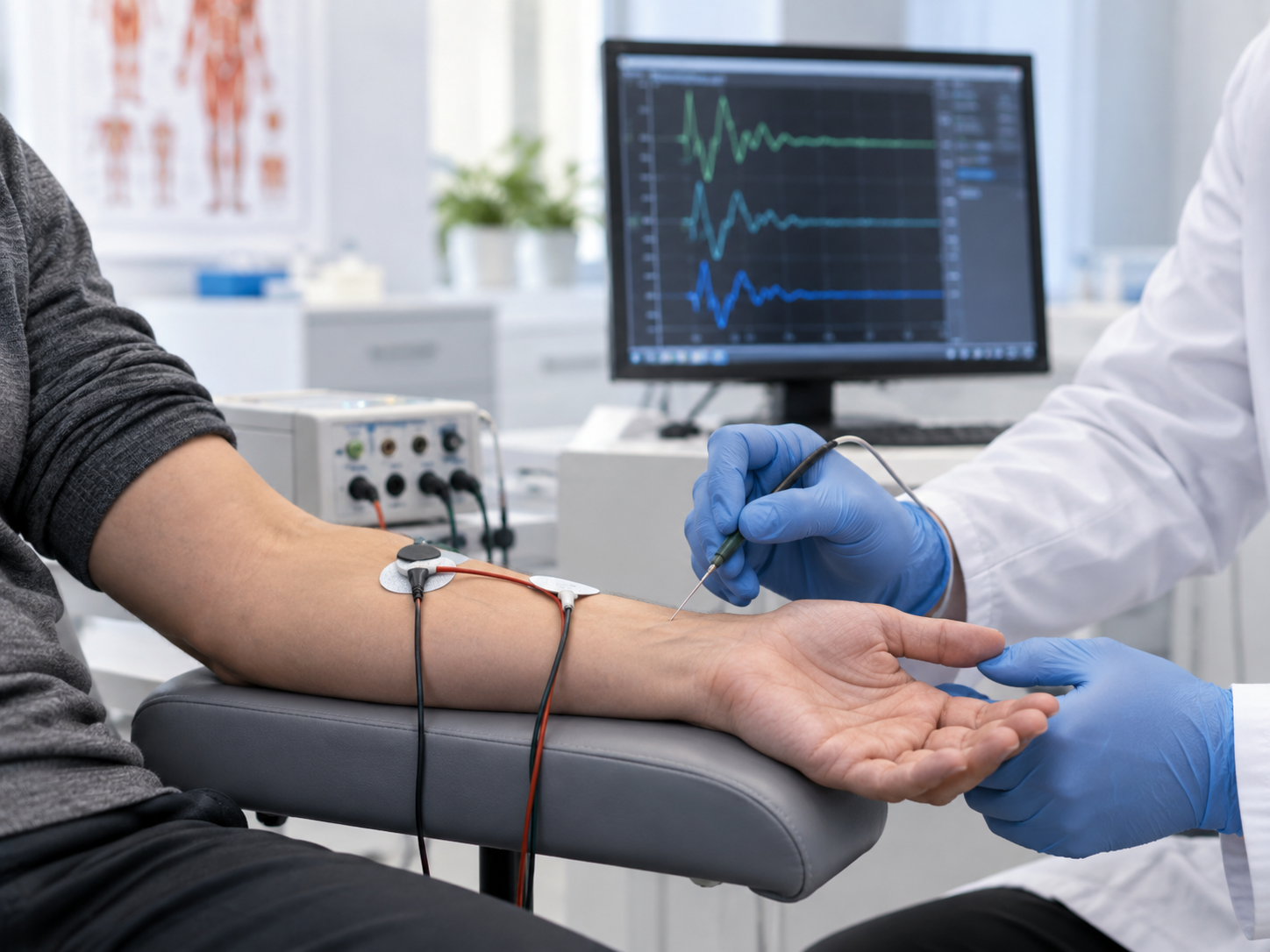
What Is an EMG Test?
An EMG, short for electromyography, is a diagnostic test that helps your doctor see how well your muscles and the nerves that control them are working.
Your nerves send electrical signals that tell your muscles when to move, and your muscles produce their own electrical activity in response. An EMG measures that activity and looks for patterns that may suggest a nerve or muscle problem.
During the test, a very thin needle electrode is placed into specific muscles to record their electrical activity while you relax and gently contract them.
The information can help your doctor better understand whether symptoms such as tingling, numbness, weakness, or unexplained muscle discomfort may be connected to an issue with the muscles, nerves, or their communication.
An EMG is also commonly performed alongside a nerve conduction study (NCS). While the EMG focuses on your muscles, the nerve conduction portion looks at how quickly and effectively electrical signals travel through your nerves. Together, they provide a more complete look at how your nerves and muscles are functioning.
What Does an EMG Test Show?
An EMG test may help identify signs of:
- Radiculopathy: This happens when a nerve root in the spine becomes compressed or irritated, often due to a herniated disc or spinal stenosis. It can cause pain, numbness, tingling, or weakness that travels into an arm or leg.
- Peripheral neuropathy: This refers to damage to nerves outside the brain and spinal cord. Diabetes is one common cause, although several other conditions can also affect these nerves.
- Nerve entrapment syndromes: These occur when a nerve becomes pinched or compressed in a specific area. Carpal tunnel syndrome is a common example.
- Muscle disorders: In some cases, symptoms may be related to a problem within the muscle itself, such as an inflammatory muscle condition or certain muscular disorders.
- Motor neuron diseases: EMG testing can also help doctors look for changes involving the nerve cells that control voluntary muscle movement.
If you’re dealing with back pain along with tingling, numbness, weakness, or pain that travels into your leg, an EMG may help your doctor determine whether a pinched or irritated nerve in your spine is part of the problem.
Similarly, if you have sciatica symptoms, an EMG can provide more information about whether a nerve root is being affected. From there, your doctor can use those findings, along with your exam and other test results, to help guide the next steps in your care.
What to Expect Before, During, and After the Test
Knowing what to expect makes an EMG feel less intimidating. Fortunately, the test is fairly straightforward, and there’s usually very little you need to do to prepare.
Before the Test
Your doctor may ask you to skip lotions, oils, or creams on the areas being tested, since they can affect how well the electrodes work. It’s also important to let your care team know about any medications you take, especially blood thinners, as well as any pacemakers or other implanted devices.
During the Test
During the EMG portion, a specialist will place a very thin needle electrode into several muscles to measure their electrical activity. You may feel a quick pinch or some mild discomfort, similar to a blood draw or acupuncture.
You’ll then be asked to relax and gently tighten certain muscles while the specialist records the signals.
Depending on how many areas need to be checked, the test typically takes about 30 to 60 minutes.
If a nerve conduction study is performed at the same time, small electrodes will also be placed on your skin. You’ll feel brief electrical pulses that may cause a quick tingling sensation or muscle twitch. It can feel a little unusual, but the pulses are very brief.
After the Test
Once the test is finished, you can get right back to your normal routine. You may notice some mild soreness or bruising where the needle electrodes were placed, but this generally fades within a day or two.
Your doctor will then review the results along with your symptoms, physical exam, and any other testing to help determine what may be causing your symptoms and what the next steps in your care might look like.
Trusted EMG Testing and Nerve Pain Care in Central Florida
At Florida Spine and Pain Institute, our team uses EMG and nerve conduction testing as part of a comprehensive approach to diagnosing nerve and muscle-related symptoms.
By looking beyond the pain itself, we can gather the information needed to better understand what may be happening and determine the most appropriate next steps for your care.
Your care is led by double board-certified Dr. Javier Placer and an experienced team specializing in advanced interventional pain management. With more than 20,000 patients treated, Florida Spine & Pain Institute has become a trusted name for pain care throughout Central Florida.
And with five convenient locations in Clermont, Orlando, Davenport, Winter Park, and Kissimmee, expert care is closer than you may think.
You don’t have to keep wondering what’s causing your symptoms. If numbness, tingling, weakness, or radiating pain is interfering with your day, take the next step toward answers, better function, and meaningful relief.
Book an appointment with Florida Spine & Pain Institute today.
FAQs About EMG Test in Orlando and Other Areas in Central Florida
How long does an EMG test take?
Most EMG tests take about 30 to 60 minutes. The exact timing depends on how many muscles and nerves your doctor needs to evaluate. If a nerve conduction study is done during the same appointment, the visit may take a little longer.
Can I drive myself home after an EMG?
Yes. EMG testing doesn’t require sedation, so you can usually drive yourself home and return to your normal activities afterward. If you’re feeling nervous about the test, you’re welcome to bring someone along for support.
Do I need to do anything to prepare for an EMG?
Preparation is pretty simple. On the day of your test, avoid applying lotion, oil, or cream to the areas being examined, as these can interfere with the electrodes.
It’s also a good idea to wear loose, comfortable clothing. Be sure to let your doctor know about any medications you take, especially blood thinners, as well as any implanted devices such as a pacemaker.
Still dealing with numbness, tingling, weakness, or nerve pain? Get answers with expert diagnostic care at Florida Spine and Pain Institute. Book an appointment today and take the next step toward understanding what’s causing your symptoms.
Disclaimer: The information provided on our website is for informational purposes only and is not intended as a substitute for professional medical advice, diagnosis, or treatment. Always consult a qualified healthcare provider about any health concerns or before starting a new treatment.
We respect the privacy and confidentiality of our patients’ information and adhere to the highest standards of medical ethics. At Florida Spine & Pain Institute, we’re here to help you explore the options that are right for you.