
TL;DR: Medial branch block vs facet joint injection comes down to target and purpose. A facet joint injection treats irritation in or near the joint, while a medial branch block numbs the small nerves carrying pain signals from that joint. It’s often used to help confirm whether radiofrequency ablation may be appropriate.
Back or neck pain can feel more confusing once injection options enter the conversation.
Two procedures may sound almost the same. Both can relate to facet joint pain. Both may involve a quick outpatient injection. But they don’t do the same job.
We help patients understand why one option may fit their symptoms better than another. Here’s the simple breakdown of medial branch block vs facet injection.
First, What Are Facet Joints?
Facet joints are small joints in the back of the spine. They help you bend, twist, and move with control.
When irritated by arthritis, injury, or wear over time, they can cause back or neck aching or stiffness. Facet pain may worsen when you lean back, twist, stand for long periods, or rise from a seated position.
Medial branch nerves carry pain signals from those joints to the brain. The joint is often the source. The nerve is the messenger.
That difference explains why these procedures target different spots.
The Main Difference Between the Two
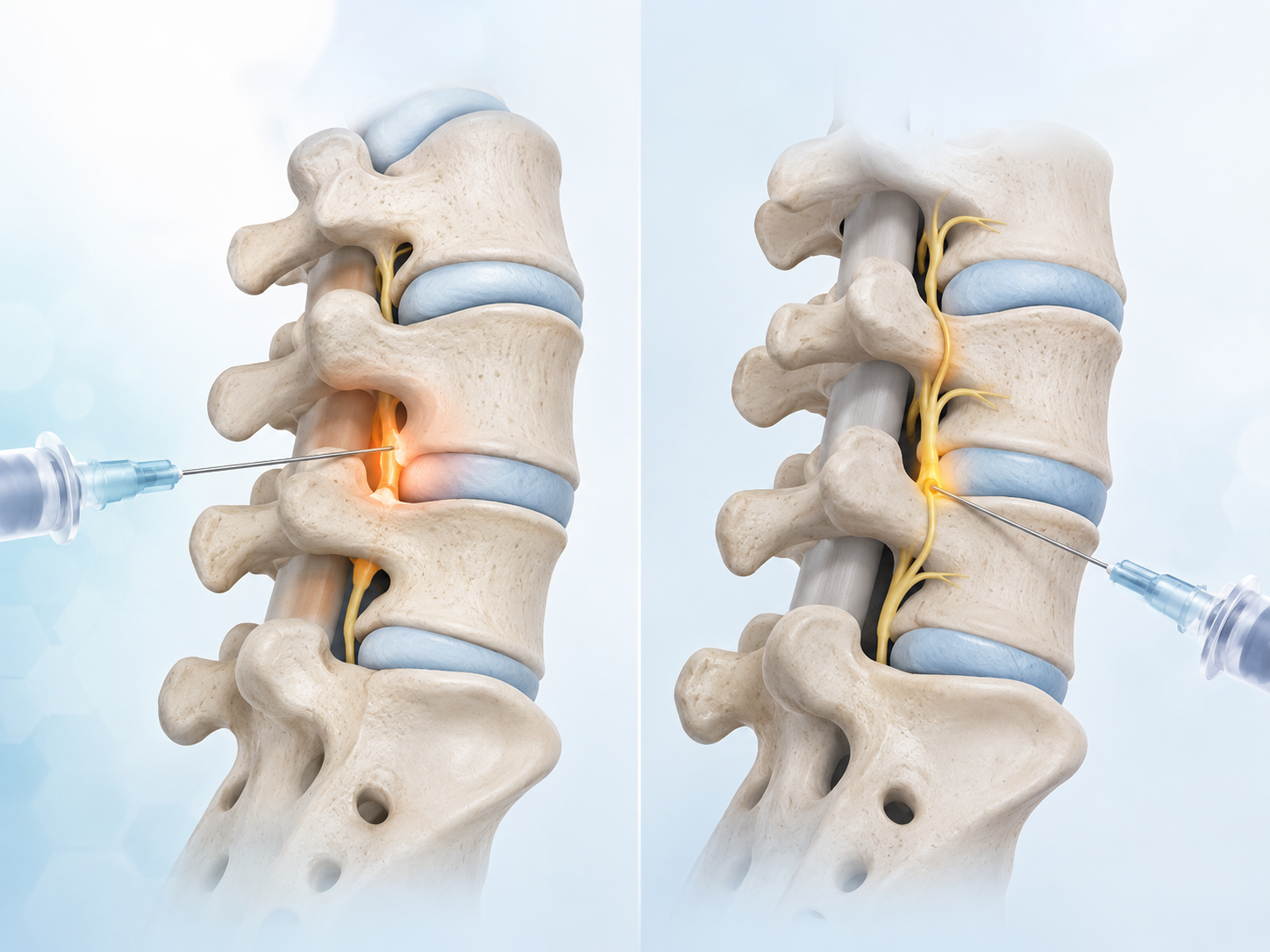
A facet joint injection targets the joint itself. It injects medicine into or near the facet joint, often a local anesthetic and steroid, to reduce irritation and inflammation.
A medial branch block targets the medial branch nerves. It places numbing medicine near those nerves to see whether blocking their signals reduces your pain.
Spine-health explains the difference clearly: facet joint injections go directly into the facet joint, while medial branch blocks target the medial branch nerves that carry pain signals from the joints.
Same neighborhood. Different target.
What Each Procedure Is Usually Used For
A facet joint injection is often more therapeutic. That means the goal is to reduce inflammation and ease symptoms, at least temporarily.
It may be considered when your provider thinks the joint itself is irritated. Relief may last days, weeks, or longer, depending on your condition and response.
A medial branch block is usually more diagnostic. That means the goal is to learn whether those nerves are carrying your pain signals.
If your pain drops clearly during the numbing window, the block may suggest that the facet joints are involved. This can help your provider decide whether radiofrequency ablation is a good fit for your care plan.
Cleveland Clinic notes that relief after a diagnostic nerve block can help confirm that a specific nerve is the source of the pain before RFA is considered.
A Quick Side-by-Side Guide
| Procedure | Main Target | Main Purpose | Typical Relief |
| Facet Joint Injection | The facet joint | Reduce inflammation and pain | Temporary, varies |
| Medial Branch Block | Medial branch nerves | Test pain signals from facet joints | Usually hours |
| Radiofrequency Ablation | Medial branch nerves | Longer interruption of pain signals | Months for some patients |
CMS lists intra-articular facet joint injections, medial branch blocks, and radiofrequency ablation as types of facet joint interventions for chronic spine pain.
How Providers Decide Which Fits You
Your provider should look at your symptoms, exam, imaging, medical history, and treatment goals.
A facet joint injection may make sense when inflammation inside or near the joint seems to be the main issue. It may also help during a painful flare.
A medial branch block may make sense when your provider needs more proof before recommending a longer-lasting nerve treatment like RFA. In some cases, insurance plans may require diagnostic blocks before RFA.
The decision isn’t about which injection is “better.” It’s about which one answers the right question. For patients with back pain or neck pain, the goal is to match treatment to the most likely pain source.
What to Expect During Treatment
Both procedures are usually done in an outpatient setting.
Your provider cleans the skin, numbs the area, and uses imaging guidance to place the needle. Facet blocks place local anesthetic and steroid into the joint, while medial branch blocks place medication near the nerve supplying the joint.
During a facet joint injection, medicine is placed into or near the joint. During a medial branch block, the needle is placed near the small medial branch nerves.
You may feel pressure or a brief pinch. Most patients go home the same day.
What Your Results Can Tell Your Doctor
Your response matters.
If a facet injection helps, it may suggest the joint inflammation is part of your pain pattern. If a medial branch block provides short-term relief, it may suggest that the medial branch nerves are carrying pain from the facet joints.
If either procedure doesn’t help, that still gives useful information. Your provider may look at other sources, such as a disc problem, sacroiliac joint pain, muscle strain, spinal stenosis, or nerve root irritation.
Good treatment starts with the right diagnosis.
Possible Side Effects and When to Call
Most side effects are mild. You may notice temporary soreness, bruising, numbness, or a short pain flare. Less common risks can include infection, bleeding, allergic reaction, or nerve irritation.
Call your provider if you have a fever, worsening redness, swelling, drainage, new weakness, new numbness, or worsening pain.
Making the Choice With a Clear Plan
Choosing between these procedures should never feel like guesswork.
A facet joint injection may help calm an irritated joint. A medial branch block may help confirm whether the nerve pathway is involved. Both can play a role in a personalized treatment plan, depending on your diagnosis and goals.
Here, we examine your symptoms, imaging, prior treatments, and daily limitations before recommending any procedure. If facet-related pain is affecting your sleep, movement, or routine, schedule a consultation to discuss your options.
Clear Answers About Facet Pain Injections
What Is the Next Step if a Medial Branch Block Doesn’t Work?
If a medial branch block doesn’t reduce your pain, your provider may reassess the diagnosis. That may mean reviewing imaging, checking for disc-related pain, sacroiliac joint pain, muscle strain, spinal stenosis, or nerve root irritation. A “negative” block can still be useful because it helps rule out one pathway.
What Is the Success Rate of the Medial Branch Block?
Success depends on the purpose. For a diagnostic medial branch block, success usually means clear pain reduction during the expected numbing window. Your provider may also ask whether bending, twisting, standing, or walking feels easier. The block itself is usually short-acting. Its value lies in the information it provides your care team.
Is a Nerve Root Block the Same as a Facet Joint Injection?
No. A nerve root block targets a spinal nerve root, often when pain travels down an arm or leg. A facet joint injection targets the small facet joints in the spine. These procedures treat different structures and pain patterns.
What Is Another Name for a Medial Branch Block?
A medial branch block may also be called a facet nerve block or diagnostic facet block. Some people use similar terms loosely, so it’s always helpful to ask your provider what structure they plan to target.
The right injection depends on the right diagnosis. Florida Spine & Pain Institute can help you understand which option fits your symptoms, goals, and daily life.
Schedule Your Pain Consultation
Disclaimer: This article is for informational purposes only and isn’t a substitute for medical advice, diagnosis, or treatment. Always talk with a qualified healthcare provider about your symptoms, diagnosis, and treatment options.