
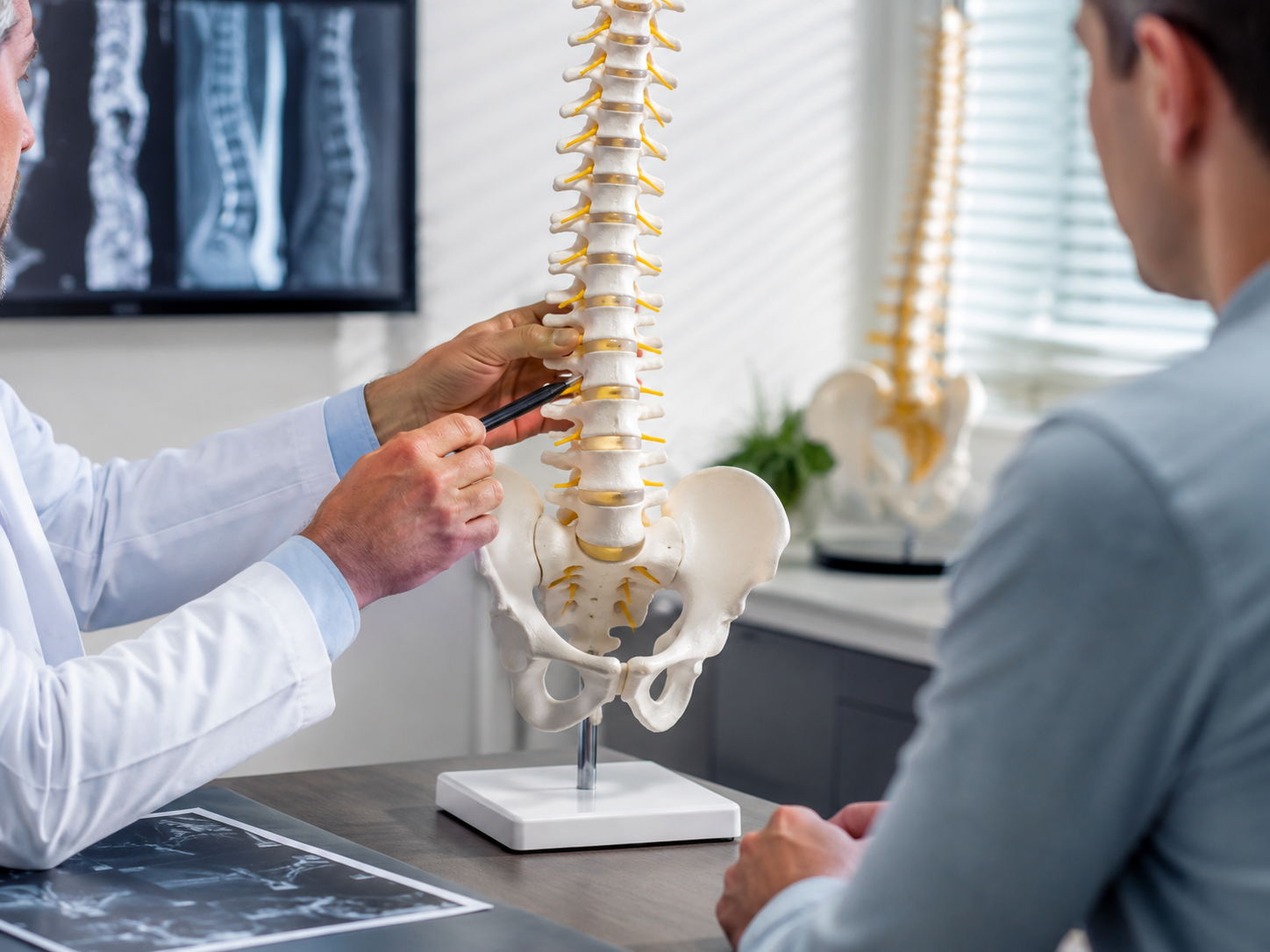
Interventional pain management is a medical approach that uses targeted, often minimally invasive treatments to help diagnose and treat certain pain conditions. It’s different from medication-only care because it focuses on the likely pain source, not only symptom control. It’s also different from surgery because most treatments don’t involve structural repair. The goal is better pain control, function, mobility, and quality of life when the diagnosis supports this approach.
Pain care shouldn’t feel like a guessing game. You may hear about medication, physical therapy, injections, nerve procedures, regenerative medicine, or surgery and wonder where interventional care fits.
The terms can blur together, especially when pain keeps affecting how you move, sleep, work, or drive.
At Florida Spine & Pain Institute, we offer treatment options for selected spine, joint, and nerve-related pain conditions. Our approach looks beyond pain in isolation. We consider diagnosis, movement, function, previous care, and daily goals.
So, what is interventional pain management, you ask? Simply put, it’s targeted pain care for specific pain patterns when the findings point that way.
What Does Interventional Pain Management Mean
Pain medicine includes the study, prevention, evaluation, treatment, and rehabilitation of people in pain.
Interventional pain management is a specialized part of pain medicine. It focuses on identifying the likely source of pain and using targeted treatments to help reduce pain signals, calm irritation, or improve function.
An interventional pain specialist may review imaging, exam findings, medical history, medication use, previous treatments, and functional goals before recommending care.
The procedure is not the starting point. The diagnosis is.
One pain treatment path is not better than any of the other options. Instead, the focus should be on choosing the correct treatment as the best tool for the diagnosis.
| Type of Care | Main Goal |
| Medication | Reduce symptoms through medicine |
| Physical Therapy | Improve strength, movement, and mechanics |
| Interventional Pain Care | Target a suspected pain source or pain pathway |
| Surgery | Repair, replace, stabilize, or decompress tissue when needed |
How It Differs From General Pain Management
General pain management can include medication review, physical therapy, lifestyle changes, exercise guidance, education, and care coordination.
Interventional pain management is more specific. It adds targeted procedures when pain appears to involve a joint, irritated nerve, spinal structure, or another identifiable source.
That doesn’t mean interventional care replaces general care. It often works best as part of a broader plan. A patient may need rehabilitation, medication guidance, activity changes, and targeted care working together.
Florida Spine & Pain Institute brings interventional care together with Physical Medicine & Rehabilitation expertise. We focus on function, mobility, pain, and quality of life.
How It Differs From Surgery
Interventional care is not the same as surgery. Surgery usually repairs, removes, replaces, stabilizes, or decompresses a structure. That’s the right choice for some patients.
Minimally invasive pain management usually uses smaller access points, image guidance, injections, nerve treatments, or implantable technologies when the condition fits. The goal is to reduce pain signals, support function, or clarify the pain source without traditional surgery.
How It Differs From Medication-Only Care
Medication helps many patients. It can reduce inflammation, calm nerve pain, relax muscle spasm, or make activity more manageable.
But medication alone doesn’t always explain why pain keeps returning.
Interventional care asks a different question: can we identify the pain source and treat that area more directly?
For example, radiating leg pain may involve an irritated spinal nerve. Knee pain may come from arthritis, a tendon, the joint itself, or pain referred from another area. Neck pain with arm tingling may point toward nerve irritation.
An interventional approach helps match the treatment to the source, not only the symptom.
The Significance of the Diagnosis
There is no such thing as universal back pain or general knee pain that can be treated the same way.
Two people can both have low back pain that responds to general pain and anti-inflammatory medication. Yet, when you look closer at how the pain presents and impacts their lives, you’ll notice they need different treatment paths.
For instance, lower back pain can stem from an array of things, like:
- Irritated nerves.
- Arthritic spine joints.
- Muscle tension.
- Sacroiliac joints.
- Hip pain that feels like back pain.
This is why your provider must review the full picture first. They’ll examine:
- Where pain starts and travels
- What the pain feels like
- Which movements trigger symptoms
- What has already helped or failed
- Imaging results
- Strength, reflexes, sensation, and movement
- Sleep, work, walking, standing, and daily limits
Conditions That May Lead to Interventional Care
Patients often explore interventional pain procedures when their pain is persistent, recurring, or limiting function.
Common reasons include:
- Back pain that travels into the hip or leg
- Neck pain that travels into the shoulder, arm, or hand
- Arthritis-related joint pain
- Facet joint pain in the spine
- Sacroiliac joint pain
- Nerve pain, burning, tingling, or numbness
- Spinal stenosis symptoms
- Pain after injury or surgery
- Chronic pain that hasn’t improved with basic care
It doesn’t mean every patient with these conditions needs an interventional procedure. A focused evaluation can determine whether or not targeted care belongs in the treatment plan.
Examples of Interventional Pain Procedures
This isn’t a full procedure menu. Still, a few examples help show how interventional care works.
- Epidural injections may deliver medication near irritated spinal nerves.
- Facet joint injections may help evaluate or treat small spinal joint pain.
- Joint injections may help selected shoulder, hip, or knee pain.
- Radiofrequency ablation uses heat to disrupt selected pain-signal pathways.
- Peripheral nerve stimulation uses mild electrical impulses for selected nerve pain.
- Lumbar decompression may fit selected lumbar spinal stenosis cases.
- Regenerative medicine may be considered for selected musculoskeletal concerns, depending on treatment type, evidence, regulation, and patient factors.
Do note that, despite the growing body of research, the FDA has not yet approved regenerative medicine therapies for orthopedic conditions such as osteoarthritis, tendonitis, disc disease, or pain.
Who May Benefit From Interventional Pain Management?
You may benefit from an evaluation if pain keeps disrupting daily life after first-line care.
That includes pain that limits
- Walking
- Sitting
- Standing
- Sleeping
- Work
- Lifting
- Driving
- Exercise
- Physical therapy progress
An interventional pain specialist can help decide whether a targeted treatment fits your diagnosis. They can also explain when another approach makes more sense.
Who May Not Be a Candidate?
Interventional pain management isn’t right for every patient.
A procedure may not be appropriate if:
- Symptoms require emergency care
- A clear surgical problem needs urgent evaluation
- Infection or certain medical risks are present
- Blood-thinning medication can’t be managed safely
- Imaging, exam, and symptoms don’t support a target
- The likely benefit doesn’t outweigh the risk
- The patient’s goals would be better served by another type of care
This is why a careful consultation matters. A good treatment plan shouldn’t just explain what’s recommended but also why it fits.
Realistic Outcomes Matter
Interventional pain management can be helpful, but it’s not a cure or a guaranteed way to avoid surgery.
Some treatments:
- Aim to reduce inflammation.
- Help interrupt pain signals.
- Help confirm the source of pain.
- Support function so patients can participate more comfortably in therapy or daily routines.
Relief may be partial and may take time to measure. In some cases, a procedure doesn’t provide enough benefit, and the plan needs to change.
A responsible plan tracks progress by function, not only pain level.
Are you walking farther? Sleeping better? Sitting longer? Returning to therapy? Using medication more safely?
Those are meaningful outcomes.
Care Should Fit the Whole Person
Pain rarely affects only one part of the body. It affects confidence, sleep, movement, work, and daily routines.
At Florida Spine & Pain Institute, interventional care is part of a broader treatment lens. The team considers pain source, mobility, function, prior care, medication use, and daily goals before recommending treatment.
Advanced care should feel personal. Not rushed, automatic, or one-size-fits-all.
Explore Our Interventional Pain Care
FAQs About Minimally Invasive Pain Management
Is Interventional Pain Management the Same as Surgery?
No. Interventional pain management is usually non-surgical and minimally invasive.
- Surgery repairs, replaces, removes, or stabilizes a structure.
- Interventional care often focuses on reducing pain signals, calming irritation, or improving function without traditional surgery.
Does Interventional Pain Management Replace Physical Therapy?
Not usually. Physical therapy and interventional care often work together. A procedure may help some patients move better and participate more fully in rehabilitation.
Does Interventional Pain Management Mean I’ll Need Injections?
Not always. Injections are one category of care, but not every patient needs them. Your provider may recommend therapy, medication changes, or another option depending on your diagnosis and goals.
Can Interventional Pain Management Help Me Avoid Opioids?
It may help some patients use a broader, non-opioid-focused plan, but the outcome depends on the condition. Interventional care doesn’t automatically replace medication. Your provider will review risks, benefits, and alternatives based on your health history.
How Do I Know if I’m a Candidate?
The best way to know is through an evaluation. Your provider will review all the details of your situation before recommending interventional care or any other pain management treatment plan.
Request Your Pain Consultation
Disclaimer: The information provided on our website is for informational purposes only and is not intended as a substitute for professional medical advice, diagnosis, or treatment. Always consult a qualified healthcare provider about any health concerns or before starting a new treatment.
We respect the privacy and confidentiality of our patients’ information and adhere to the highest standards of medical ethics. At Florida Spine & Pain Institute, we’re here to help you explore the options that are right for you.